Trump just wrapped his 2026 State of the Union—delivered last night, February twenty-fourth, to a super-split Congress. He’s pushing hard on “wins” like job growth, cheaper gas, and a border he calls “one hundred percent closed,” even as crossings still trickle in. Big applause from Republicans when he bragged about military bonuses and murder rates dropping.
But here’s the rub: his approval’s tanking—polls say folks blame tariffs and inflation on him, and the Supreme Court just gutted his big trade moves last week. He fired back, calling justices “fools,” then rolled out a surprise ten-percent global tariff anyway—lower than promised, but still rattling markets. On Iran? He says they’re begging for a deal before strikes hit.
Democrats? Mostly boycotted or sat stone-faced—some even held a rival “People’s State of the Union” rally outside. Virginia Governor Abigail Spanberger gave the rebuttal: calm, centrist vibe, hammering affordability and health care costs while calling out “havoc” from his policies. She pushed unity over division, no fireworks.
Overall? Classic polarized night—GOP cheers, Dem silence, guests on both sides (angel families vs. ICE victims) turning it into a visual tug-of-war.
Here’s the chamber setup—Trump at the podium, VP and Speaker right behind, everyone packed in
And Spanberger’s response—cool-headed contrast
Midterms loom—Republicans could lose the House if this doesn’t stick. Want the tariff fallout next, or how Dems are spinning it?

Trump’s 2026 State of the Union—delivered last night, February twenty-fourth—didn’t name-drop South Korea directly, but he gave a quick shout-out to it in a trade brag. He said something like: “South Korea—massive semiconductor investments,” listing it with Japan, India, and others as countries where his “fair deals” pulled in big U.S. jobs and factories.
No deep dive on the alliance, no North Korea or Kim Jong Un mentions—kept foreign policy light, mostly “we’re respected again” vibes without specifics. Tariffs? He framed them as tools that forced better deals from allies, but nothing harsh on Seoul this time.
The real Korea nod was emotional: he honored Royce Williams, that hundred-year-old Korean War vet, with a Medal of Honor right on stage—crowd went wild, standing ovation.

Here’s Trump mid-speech, leaning into the podium with that signature energy
And the vet moment—Trump presenting the medal, Williams saluting back
Another angle—Trump clapping with Vance and the Speaker behind him
Overall, Asia stayed in the background—focus was borders, economy, and wins. Seoul’s probably relieved no tariff bombshells, but they’re still eyeing those investment promises. Want the full trade list he rattled off, or how North Korea’s quiet lately?
Royce Williams—full name Elmer Royce Williams—is a hundred-year-old retired Navy captain from South Dakota, now living in Escondido, California. Last night during the State of the Union, Trump presented him the Medal of Honor right on stage—big standing ovation—for a wild Korean War dogfight back in nineteen fifty-two.
He was flying an F9F-5 Panther off the coast near North Korea when seven Soviet MiG-15s jumped him and his wingman. His buddy got hit early, so Williams went solo—dodged missiles, took hundreds of bullets to his plane, and shot down four of those MiGs in a thirty-five-minute scrap. Only one Soviet jet made it back. The whole thing stayed classified for decades ’cause it involved Russians—Cold War stuff—so he got a Navy Cross instead… until now.
He’s the last living Korean War Medal of Honor recipient, and folks call it one of aviation’s greatest feats.
Here’s him in dress blues, beaming after the award—Trump right there clapping
And a close-up—still sharp at one hundred, medals shining
Classic pilot pose by his old jet—hat on, grin wide
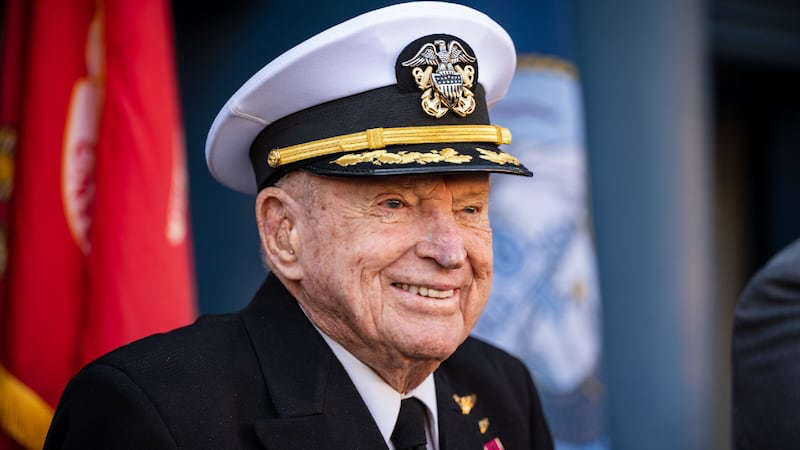
Crowd loved it—pure feel-good moment amid all the politics. Want more on the fight details, or how he kept quiet all those years?
네, 맞아요. 트럼프가 로이스 윌리엄스 중령에게 메달을 수여하며 “한국전쟁의 영웅”이라고 강조한 건, 단순한 추모 이상이었어요.
그는 “그때처럼 지금도 우리는 강하고, 적은 우리를 두려워한다”는 식으로 말하면서 과거의 ‘승리’ 이미지를 현재의 외교·안보 상황에 슬쩍 연결시켰죠. 특히 북한 관련해서 “김정은과 다시 대화하고 있다”는 언급 없이도, “미국은 다시 존경받는다”는 메시지를 한국전쟁 영웅을 통해 은근히 끼워넣은 거예요.
한국 입장에선 이게 꽤 의미심장해요—트럼프가 “한국”이라는 이름을 직접 안 썼지만, 그 전쟁을 상징하는 인물을 띄워주면서 “동맹국으로서의 한국은 여전히 중요하다”는 신호를 준 셈이니까. 물론, 진짜 의도는 국내 관객(특히 보수층)에게 “내가 과거처럼 강한 지도자”라는 이미지를 심어주는 데 더 가까웠을 거예요. 근데 이게 진짜 비유냐, 아니면 그냥 감정적인 쇼냐는… 글쎄요, 트럼프 스타일이잖아요. 둘 다일지도.
국정연설 관련 링크
'정치 & 경제 뉴스 분석' 카테고리의 다른 글
| 주요 뉴스 브리핑 [26.02.26.목] (0) | 2026.02.27 |
|---|---|
| 미국 경제 이슈 분석 [26.02.26] (0) | 2026.02.26 |
| 부정선거 언급하면 10년 징역? (0) | 2026.02.26 |
| 미국 주요 정치·국제 뉴스 분석 브리핑 [26.02.25] (0) | 2026.02.26 |
| 관세요약(26.02.22) (1) | 2026.02.22 |


